
What is Mukbang?
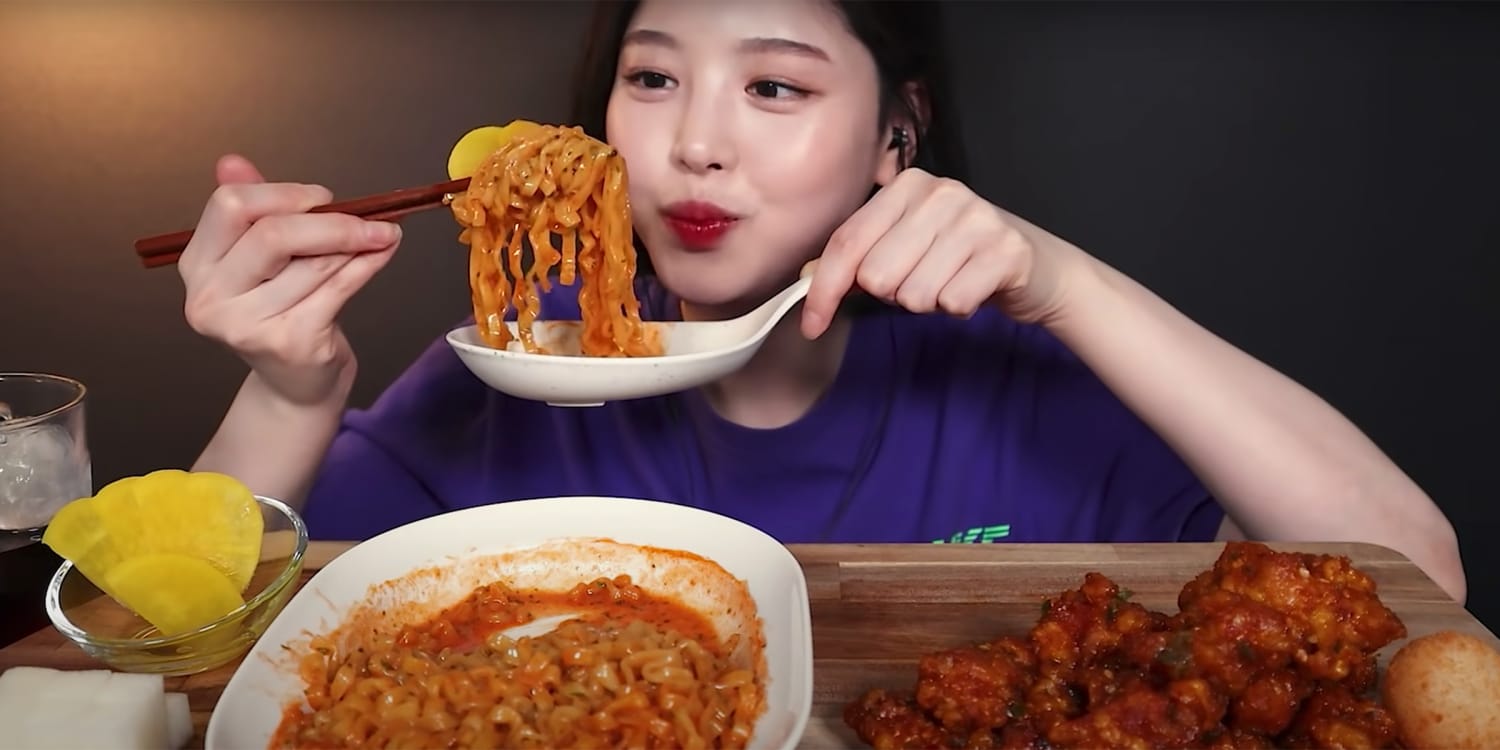
Popularized in South Korea around 2010, Mukbang comes from combining “muk-ja” (let’s eat) with “bang-song” (broadcast). Mukbang consists of people streaming a live event or video where they eat large quantities of food while also talking to the live viewers. From the surface, this may seem like a strange phenomenon – who wants to watch random strangers eat? Nevertheless, mukbang became incredibly popular on YouTube and social media platforms, collectively deciding millions across the world.
Why Do People Watch It?
Psychologists have indicated that mukbang activates specific human psychological processes in interesting ways. For viewers who might be feeling lonely, it can establish a feeling of companionship through virtual sharing—similar to eating a meal with a friend. Others are comforted by the sounds of chewing, slurping and crunching, as ASMR (Autonomous Sensory Meridian Response), known to induce relaxation, falls into this category. There is also the novelty of extreme eating—varying from giant bowls of noodles to spicy chicken wings, and seafood towers. Viewing them can feel like a food challenge with a personal component.
The Strange Appeal and Concerns
The odd popularity of mukbang programs exists because they are a structured mix of comfort and shock value. Some people may watch mukbang for fun or for relaxation, and certainly critics of it may wonder about the health risks (see Murphy 2018) for the hosts, who typically consume unhealthy portions just for entertainment. Others worry that it promotes unhealthy eating habits to its viewers. Either way, mukbang does not show any signs of slowing down, as influencers have turned mukbang into a full- or part-time job.
Ultimately, it is not just about food, it is about connection, curiosity, and comfort. What seems utterly strange, in fact, taps into some of our most primal needs as humans: wanting to share, wanting to listen, and wanting to escape, even if it is just through a screen.