
A Sudden Explosion of Conflict Beyond Borders
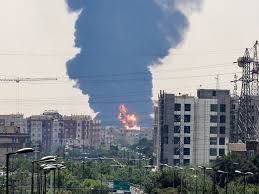
Originally conceived as a limited military operation against leadership and strategic facilities in Iran, a war arose out of the three-day combat mission that now involves several other Middle Eastern nations and is increasing rapidly in magnitude and scope. The US and Israel conducted simultaneous strikes against Iranian command and missile infrastructure; the consequences of these operations have been greater and occurred more quickly than many analysts expected.
Instead of remaining a small-scale military engagement, the fighting quickly spread throughout at least a dozen nations, with missiles and drones being launched from Iran — and from allied proxy forces operating in conjunction with Iran — that targeted both military and civilian locations well outside of Iran. For example, even though the UAE, Saudi Arabia, Bahrain, Kuwait, Oman and Cyprus are not currently in conflict with Iran, their urban areas, hotels, airports, and diplomatic facilities have been damaged or threatened as a result of both missile and drone attacks.
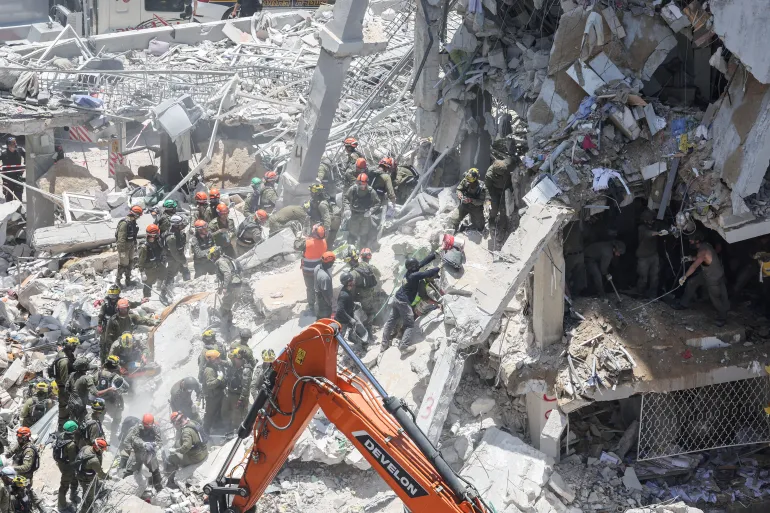
As a result of three days of ongoing retaliatory fire in Israel, residential buildings, bomb shelters, and civilians were lost, and ordinary lives were also altered forever. Ultimately, these strikes demonstrated one of the tragic characteristics of modern warfare: when using long-range weapon systems and a network of proxy forces to conduct military operations, the line between military and civilian positions becomes especially difficult to maintain.
Civilians in the Crossfire: Homes, Hotels, and Safe Zones No Longer Safe
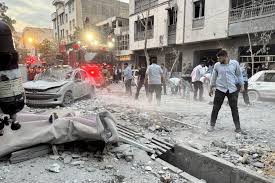
One of the most disturbing consequences of the continuing conflict has been the impact on civilians. In Israel, people were forced to stay in bomb shelters when rockets were fired into the areas they resided in; places that should have provided refuge became sites of destruction. There are even stories of people being killed, including children, who were in places that had been considered safe.
The civilian casualty count is not limited to Israel; several Gulf countries have also reported having hotels and apartments hit by debris from drones and rockets that were intercepted from hitting their intended targets in cities like Dubai and Abu Dhabi.
Countries that have traditionally maintained a neutral or diplomatic position were also being affected by the indirect effects of warfare; explosions were reported near military installations in Cyprus, raising concerns about how far-reaching the impact of the armed conflict will be, even into Europe.
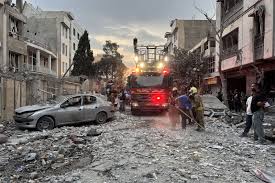
The total number of people impacted by the armed conflict is staggering. Estimates suggest that approximately one thousand people died in Iran alone from the war; many additional people were injured throughout the region. The large number of civilians who have been indirectly affected by the armed conflict indicates that civilians are often used as pawns in larger, global political conflicts. Many humanitarian organisations and human rights groups have raised concerns about infrastructure and civilian targets being violated, increasing fears that these violations may constitute violations of international laws intended to protect civilians from the devastating effects of war.
Read more- Shocking- 3 U.S. Fighter Jets Shot Down as Middle East Conflict Escalates
Strategic Ramifications: The Strait of Hormuz and Energy Markets
The rapid escalation of violence has placed key economic and strategic areas under extreme stress and changed the way we view them. The Strait of Hormuz, where about 20\% of America’s oil supply typically flows through on a daily basis, have now become a focal point in global energy discussions. As opposing forces continue to launch missiles/drones into, or near, critical commercial shipping lanes, concerns have increased over whether this vital area will be closed off altogether, or that oil supplies may cease to flow to markets — resulting in increased oil prices & volatility around the globe.
Monarchies in the Middle East that previously acted as peace mediators between Washington & Teheran now find themselves facing a very real possibility that their own safety & ability to obtain critical resources/provisions may also be in jeopardy due to escalating tensions. Airports are being closed down, rerouting of international flights and rising insurance costs for oil tankers traversing the Gulf. All this adds to an already precarious position of national security (and public safety) for these same Monarchies.
For countries that depend heavily on imported energy, the short-term humanitarian bill created by all this violence is compounded by the economic costs associated with what may occur over the long-term due to disruption of national supply chains, economic sectors and inflationary impacts.
What Comes Next: Regional Alliances and the Uncertain Path to Peace
The lack of a resolution and an apparent end to the war has put unprecedented pressure on the governments of the Middle East and the international community to respond, appropriately align their alliances and protect their citizens as best they can. Some countries have condemned Iran’s attack on their territorial integrity; while others have called for immediate negotiations and resumption of hostilities. There have been calls for the UN and other international organisations to exercise restraint, but actual negotiations have not begun.
The internationalisation of the conflict has drawn the attention of regional and non-regional actors, and there are ongoing debates surrounding involvement, condemnation of violence and the possibility of using diplomatic channels to try and prevent further military escalation. The speed with which this conflict escalated demonstrates that what can begin with a limited military operation can very quickly turn into a regional conflict. In this era of long-range weapons, densely populated cities, and a myriad of complex international alliances, the human cost (life lost, families shattered, children living in fear) proves that wars fought in the 21st century have no geographic boundaries, and their effects will be felt long after the fighting stops. click here for the source