

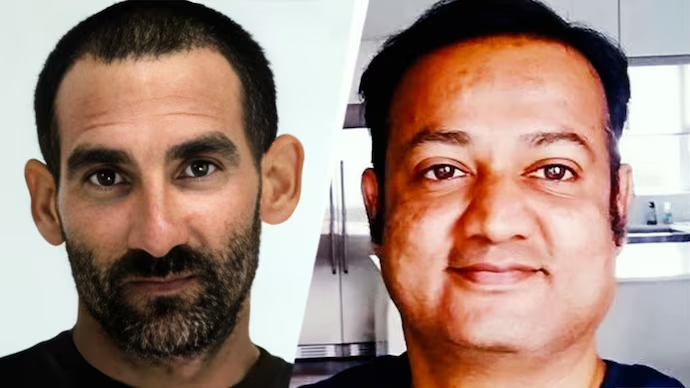
In Dallas, Texas, a gruesome and shocking attack resulted in the death of Chandra Mouli Nagamallaiah, a 50 year old who had immigrated from Karnataka, India. Last Wednesday, Nagamallaiah was working as a motel manager when an argument that started over a broken washing machine escalated. The man who was reportedly involved in the altercation was Nagamallaiah’s coworker, 37-year-old Yordanis Cobos-Martinez. Body cam footage revealed the irritated outburst came after instructed the person he was arguing with and asked someone to seemingly translate. This apparently angered Cobos-Martinez and a brutal chase ensued with Nagamallaiah running toward the motel office where his wife and 18-year-old son were located. Cobos-Martinez caught up with him and his machete fatally attacked Nagamallaiah beheading him. As one of the most horrific parts of the investigation, Cobos-Martinez kicked Nagamallaiah’s severed head in front of the Nagamallaiah family.
Perpetrator & Legal Action
Darwenis Cobos-Martinez has documented court action history. Reportedly, he has a lengthy past record in Houston, including multiple arrests for assault and auto theft. Allegedly, the Dallas Police have arrested him and charged him with capital murder in relation to the investigation. Capital murder represents the seriousness of the charge and the heinousness of the crime. The Dallas Police have the investigation and case report, and detectives are piecing the incident back together using video surveillance along with witnesses—including the victim’s family witnesses.
Reactions & Broader Concerns
The episode has created horror, outrage and great sadness, especially for the Indian community and other immigrant groups who may feel particularly vulnerable. It raises serious questions about workplace safety and dispute de-escalation, as well as how language, or misunderstandings, can lead to violent outcomes. It makes the crime even more horrific that Nagamallaiah’s wife and son were at the site of the attack, not simply because of the law but because of the emotional trauma. Many are calling for better protections for workers, especially in those workplaces with language barriers. Coverage of the case is generating debates around immigration, crime, and mental health. As the case continues through the justice system, it will be interesting to see whether it produces some stronger safeguards or policy changes in similar contexts. click here for the source