
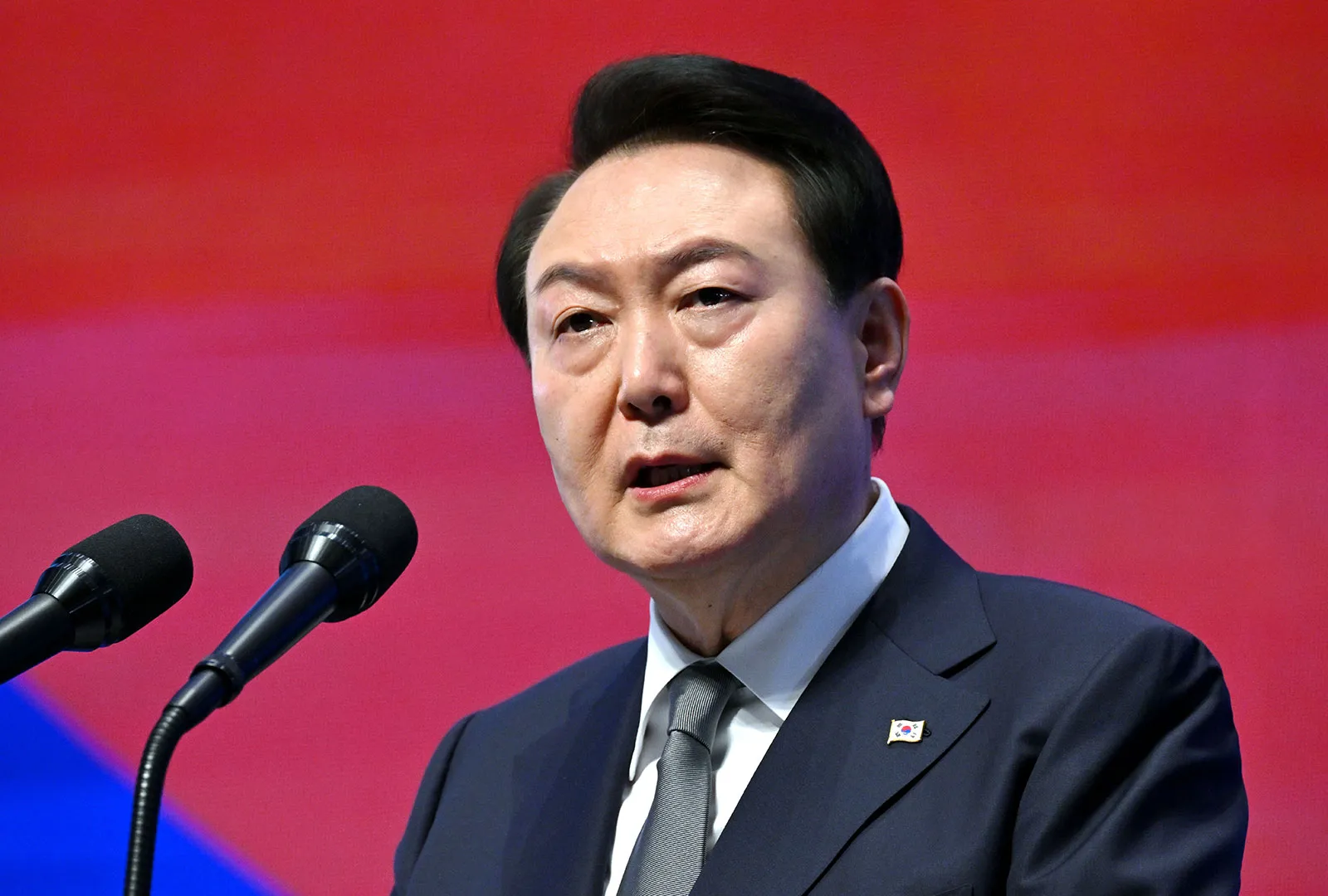
In December of 2024, South Korea experienced a major constitutional crisis due to President Yoon Suk Yeol’s declaration of Martial Law as a way to circumvent political gridlock with an opposition-controlled legislature. The martial law decree allowed the military and police to mobilize/ surround the National Assembly and to use force to keep members of the National Assembly from entering Parliament; additionally, the military ordered the suspension of the normal legislative process.
The military order was only in effect for about 6 hours (expired when members of the National Assembly broke through the military blockade), but the consequences from the military order will shape South Korea’s political landscape for years to come.
This Martial Law was South Korea’s first declaration of Martial Law in over 40 years, and many people in South Korea viewed this as a return to prior periods in South Korea’s history when emergency powers were used by the government during periods of internal violence. Therefore, instead of supporting the governance of South Korea through the use of emergency powers, Yoon’s actions drew fierce political backlash and incited fear among the general population regarding the erosion of democratic principles and processes. Yoon’s use of military personnel in the center of Seoul (in front of the National Assembly) created an image of a government using military power for authoritarian purposes, rather than utilizing governmental powers democratically.
Read more- Top 3 Ways to Make Valentine’s Day More Special
The Court’s Verdict: Rebellion and Life Imprisonment
On February 19, 2026, the Seoul Central District Court issued a landmark ruling finding Yoon guilty of insurrection. This was due to Yoon’s attempt to undermine the democratic system of government through the use of martial law to prevent the legislative branch from operating normally and consolidating executive authority.
The judge ruled that Yoon’s actions—namely using troops to block the National Assembly—were illegal and intentional acts. It was reasoned that these actions represented an effort to fundamentally alter the democratic structure of the nation.
Thus, Yoon received a life sentence—one of the harshest sentences ever handed down to a former head-of-state in South Korea. Prosecutors sought a death sentence on the grounds that Yoon’s actions seriously placed at risk the integrity of democracy in South Korea; however, due to the lack of widespread violence that occurred during Yoon’s short-lived period of martial law, the court opted to give Yoon a life sentence.
South Korea has not executed anyone since 1997, effectively maintaining an absolute moratorium on capital punishment. The court’s ruling reflects the judicial system’s approach to preventing executive aggrandizement while reaffirming the system of checks and balances outlined in the constitution of South Korea.
Political Fallout and Legal Ramifications
The decision made was not just about Yoon Suk Yeol. It also had implications for thousands of police and military leaders who helped enforce Kim Jung Un’s martial law order; many were convicted and sentenced as well, including former Minister of National Defence (MND) Kim Yong Hyun, who received a 30-year sentence due to his part in planning and executing the armies of South Korea.
Read more- Indian Economic Momentum in 2026: Growth, Markets & Strategic Transformation
Yoon had previously been convicted on other charges before he received this last conviction, including being sentenced to five years in prison for resisting arrest, falsifying documents or records, and not following the required decision-making process of the Cabinet in issuing the martial law order. Additionally, there were other Cabinet members such as former Prime Minister (PM) Han Duck Soo who received significant prison sentences due to their participation.
Responses from the public were mixed. Those who supported Yoon held protest rallies outside of the courthouse, while others said Yoon should have been punished more severely for his actions. This case represents a major shift in South Korean political history; it echoes historical attempts to hold Presidents accountable for their actions during previous democratic presidential administrations.
Implications for Democracy and Regional Politics
The case against Yoon raises fundamental issues of balancing executive power with constitutional protections for democracy in South Korea and elsewhere. By sending a clear message to citizens throughout East Asia that past presidents can be held accountable for exceeding their constitutional authority, South Korea has positioned itself as a key geopolitical actor in the region.
International observers of Yoon’s conviction note that the ruling could also influence how other democracies assess emergency powers and executive decisions during times of political stalemate. Amid heightened geopolitical tensions throughout East Asia — including relations between North Korea, China, and the United States — South’s recent legal solution of their internal political turmoil demonstrates the strength and resilience of South Korea’s institutions.
While Yoon’s attorneys are currently preparing an appeal of the conviction, the debate over presidential authority, legislative oversight, and steps to prevent future instances of presidential abuse of power will continue. The history being created through this unprecedented experience in the history of the Republic of Korea will have long-lasting effects on governance, civil-military relations, and how democratic institutions function in the future. click here for source