

Introduction: A Deep Sense of Betrayal
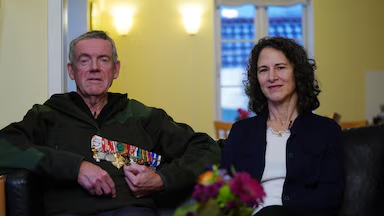
Danish veterans, who accompanied U.S. troops during the wars in Afghanistan and Iraq, are experiencing feelings of betrayal by their American counterparts. Many of these veterans have served in major conflicts after 9.11 with the American military; therefore, they are starting to feel the consequences of recent statements made regarding seizing Greenland, an Autonomous Region of Denmark’s Kingdom. The bond forged through combat between Denmark and the United States has been weakened. Both countries and NATO will feel the consequences of this relationship breakage on emotional, diplomatic and security levels.
From Allies in Combat to Political Friction NATO
Veterans such as Martin Tamm Andersen remember working with U.S. Marines in Afghanistan — an experience full of sacrifice, danger, and camaraderie. When Danish troops served in this area, the risks were great. Because of that, Danish veterans feel a strong bond with American Marines because of their joint mission.
The current situation has made that bond feel less reliable than it once did. The current situation also hits home for Anderson and others — it’s not just about the U.S. involvement in the world, it’s also the personal memories of our time together on the battlefield.
Andersen remembers how American forces worked alongside Danish forces to secure the battlefield after an insurgent attack and also assisted in the evacuation of wounded Danish troops. Those memories are starkly in contrast to the rhetoric being floated from Washington, D.C., creating a deep sense of betrayal for Danish troops who had faith in the strength of their partnership.
Why Greenland Matters: Strategic and Symbolic Importance
Greenland is more than just an area of land located in Arctic North America; it has geopolitical and economic value as a result of its proximity to North America and Europe and the natural resources that it possesses. As a result, Greenland occupies a significant position at the intersection of North America and Europe, so there is a practical basis for its strategic importance from both a military and security standpoint. Furthermore, the U.S. operates its Pituffik military facility in Greenland under a current defense pact between the U.S. and Denmark.
Although the U.S. and Denmark have historically had a strong working relationship, the recent rhetoric coming from the United States regarding their interest in the “ownership” of Greenland is seen by many in Denmark as a shift from a partnership to the desire for acquisition through diplomatic means. To the veterans of the Danish military, this change in direction by the United States is both unneeded and insulting because it challenges Denmark’s capacity to provide for its own national security.
Veterans’ Perspective: Personal Pain and Political Fallout
The American declaration that it intends to take part of the Kingdom of Denmark from the Danish Veterans Association is a shock and an affront to many veterans who served this country. Through their years of service beside American Soldiers, many of these veterans have formed strong bonds with their American counterparts, and view the declaration as not just a betrayal of those bonds, but as a betrayal of the loyalty and sacrifices they have made together. Some of these veterans have taken down their U.S. medals in protest to the declaration, demonstrating the emotional wounds that they feel extend beyond politics.
Søren Knudsen, who served in Afghanistan twice, has said that although he understands the concerns regarding Arctic security, he believes that Denmark has the capacity to protect its interests in NATO. He has an American-born wife and a brother-in-law who is a Marine in the U.S. military, showing that his frustration lies not with the American people, but rather with the political decisions that he believes have (and will continue to) reduce trust between allies. CLICK HERE FOR THE SOURCE
NATO at a Crossroads: Alliance Under Strain
The dispute involving Greenland is not simply about the antagonism represented by the Danish veterans and therefore reflects an overarching set of issues related to the NATO alliance, which has formed the foundation of both European and transatlantic security for many years. Danish Prime Minister Mette Frederiksen contends that a coerced acquisition of Greenland would mean the end of NATO as it now exists, reflecting how severe the political divide has become.
As a result of this situation, European leaders and analysts alike have expressed their concerns regarding the rhetoric associated with the Danish veterans being damaging to NATO and its collaboration with the collective defense capabilities of Europe in particular because of the currently evolving geopolitical landscape, including increased tension stemming from Russia.
Read more- Trump Invites Putin to Gaza “Board of Peace” Even as Ukraine War Rages 2026
Conclusion: Preserving Trust and Shared Security
Danish military personnel’s feelings about their experiences as allies in time of war articulate the vulnerability of their relationship with the United States. The current question regarding Greenland will provide insight into how nations will face changing diplomatic and military dynamics. Whether or not the question of Greenland leads to a long-term evolution in NATO or simply a new hurdle for NATO remains to be determined, but for many Danish military personnel who served together with the United States, the ongoing discussion is a painful reminder of the human toll that political decisions can impose on allies.