

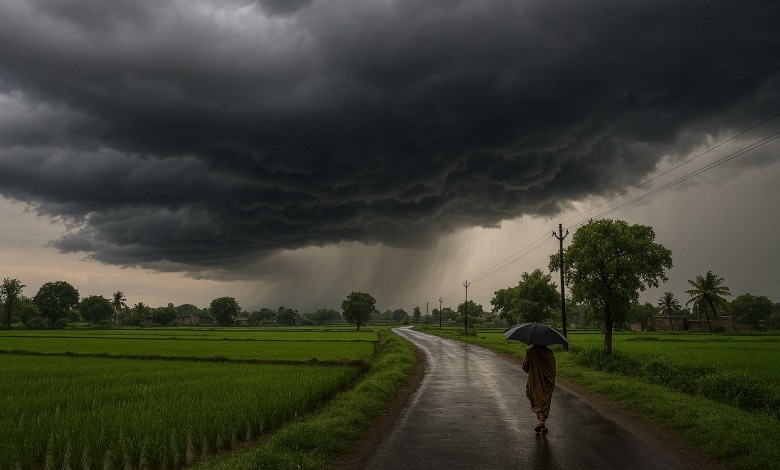
The agricultural, water security, and economic systems in India are dependent upon the arrival of the rain season (monsoon) which traditionally came at a specific time every year; however, with climate change now affecting the Earth’s atmosphere and ocean, how and when the rains arrive and their intensity and areas affected will experience major changes in the coming decades. Farmers, major cities, and the environment itself have begun experiencing the effects of these changes so it is imperative to understand the nature of these changes and why India is currently experiencing the monsoon season.
Changing Onset and Withdrawal of the Monsoon
The Climate Change has a significant impact on monsoon in India; The timing of Monsoon arrival & withdrawal have become increasingly unpredictable. Historically, the southwest monsoon arrived around early June and departed by September. The changing climate’s influence on the timing of arrival has created uncertainty and challenges for farmers who depend upon knowing the specific time frame to plant their crops.
he pressure systems and wind patterns which provide the impetus for monsoon circulation; this is similar to how a warmer surface temperature on land may, at different times, cause the atmospheric moist winds to be pulled from the oceans sooner than intended or in some situations delay rainfall indefinitely due to disruption of the ocean-atmosphere interaction patterns. In addition, some areas experience delayed withdrawal of the monsoon thereby extending rainfall into months which had previously been considered to be relatively dry. The irregular timing of the monsoon will also disrupt crop cycles; lead to increases in pest activity and result in difficulty for farmers and state governments to effectively plan for their water management needs.
Rise in Extreme Rainfall Events
Climatic changes have changed the nature of how precipitation is distributed across time, in addition to only impacting the overall volume of water that falls within certain geographical areas. As an example, climatic changes have resulted in increased frequency of high-volume (intense) precipitation events that occur over a relatively small period of time. As a result, rather than being spread out over several consecutive days, a single precipitation event may be equivalent to several days worth of precipitation.
The result of the extreme precipitation events is frequently the occurrence of flash flooding, landslides, and waterlogged urban landscapes in those cities that have insufficient drainage infrastructure to manage the increased amount of runoff from these events. As a case in point, cities such as Mumbai, Chennai, and Bengaluru have been subjected to repeated flooding events from heavy monsoon rains. In addition to the occurrence of flash flooding, the prolonged dry periods that occur between heavy rain events may substantially impact the ability of soils to recharge their groundwater supply and may be particularly detrimental to crops that require continual access to moisture.
Long-Term Impacts on Agriculture and Economy
Long-term effects of changes in the monsoon patterns on India’s economy (which still depends heavily on Agriculture) will be large. The majority of India’s agricultural land (nearly 50% of the total) is dependent on seasonal rainfall (it’s “rain-fed”), thus, most of the agricultural activity is therefore sensitive to variations in the monsoons. Climate uncertainty is leading to increased crop losses, higher input costs, and less stable incomes for farmers.
The impact of the monsoon on Agricultural production will have far-reaching implications on the larger economy as well. Not only does the monsoon affect Food prices, but it also affects Inflation and Economic growth. In contrast to the destruction that floods do to the Economy by damaging roadways, buildings, and infrastructure, droughts decrease ther; therefore, flooding causes a decrease in hydropower generation, which reduces the availability of drinking water. As a result, there is an urgent need for Climate Resilient Agricultural practices, improved Water Management practices, enhanced Forecasting Systems, and Enforcement of Strong Climate Policy.