

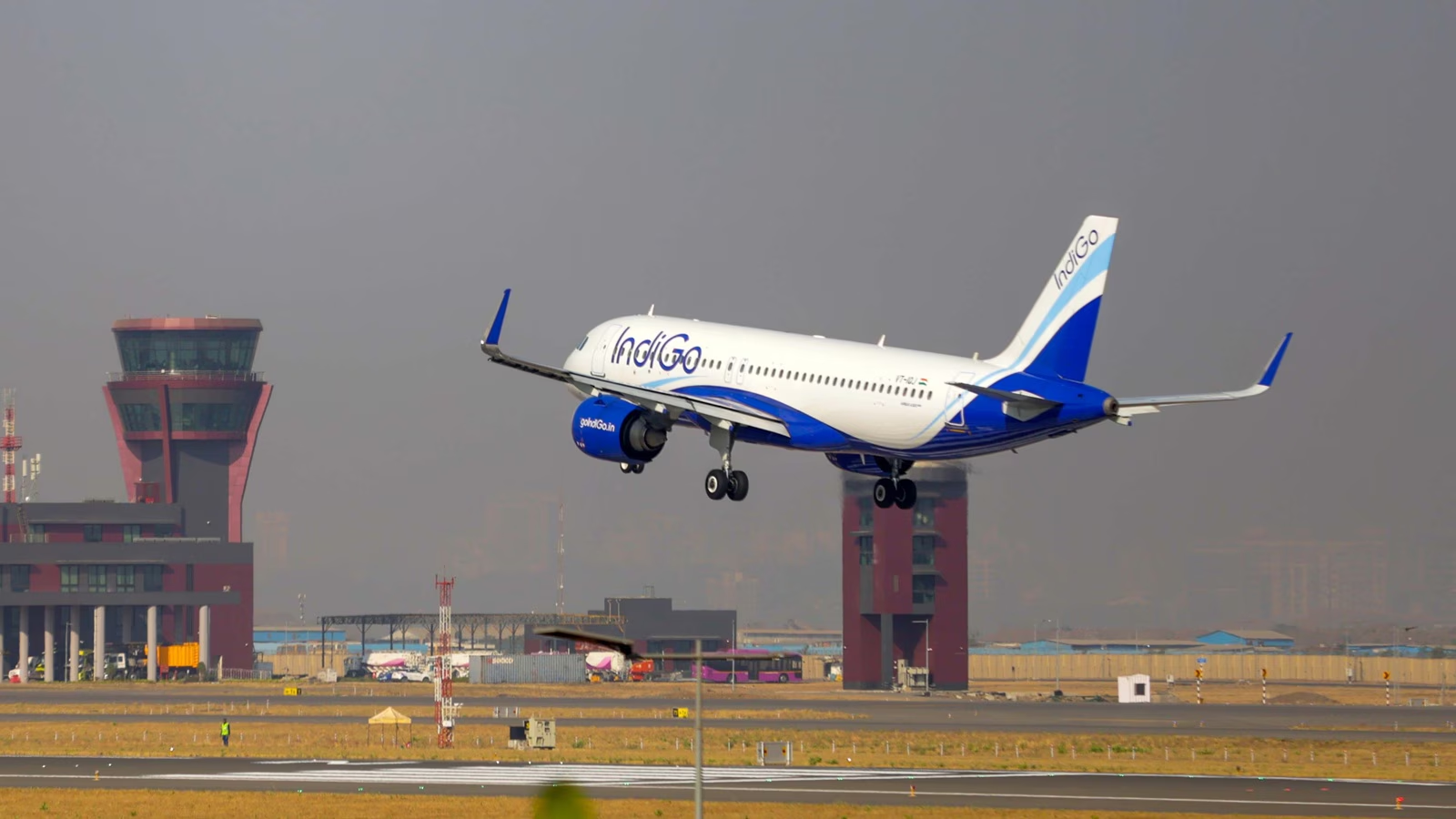
Background: What Triggered the Fine in IndiGo?
On 17-18 Jan 2026, via a significant regulatory action, India’s Director General of Civil Aviation (DGCA) issued penalties totalling US$22.2 Million to the largest airline in the country, IndiGo Airlines. The enforcement was based on a thorough investigation following the substantial operational impact caused by numerous cancellations and delays between 3 Dec 2025 and 5 Dec 2025 related to poor management; the airline had cancelled 2507 flights, had delayed 1852 flights, resulting in over 300,000 passengers stranded throughout major airport/market areas (Delhi, Mumbai, Bangalore, Chennai). The disruption generated extreme anger among passengers and the entire aviation industry (experts and observers), resulting in an investigation followed by regulatory enforcement by the DGCA against IndiGo Airlines.
What the DGCA Found: Operational and Regulatory Lapses
The Directorate General of Civil Aviation (DGCA) published an inquiry report which divulges many systemic problems which contributed to the airline crisis. The key areas of concern included operations being over-optimised, planning systems not in place, and insufficient implementation of the revised Flight Duty Time Limitations (FDTL) rules regarding crew duty/rest time, which exist to protect crew and promote safety.
The key findings from the inquiry report included:
- Minimal Roster Buffers – The airline’s planning methodology relied heavily on maximising the utilisation rate of their aircraft and crew. There was not enough margin built into rosters where weather, air traffic, etc., could impact rosters creating recovery time.
- Gaps In Management Oversight – The DGCA issued letters of caution to several of the airline’s executive leaders, including the CEO, COO regarding the airline’s management regarding their oversight of the effect of the winter schedule & new duty time regulations on daily operations.
- System Deficiencies & Lack of Preparedness – The airline lacked adequate Planning Tools, and there was no proactive risk scenario modelling to allow the airline to react quickly and return to regular operations.
Based on the facts and circumstances in this inquiry report, it was the conclusion of the DGCA that these shortcomings are evidence of systemic issues that require corrective action and oversight
Breakdown of fine
In 2020, the Directorate General of Civil Aviation (DGCA) imposed a ₹22.2-crore fine on IndiGo for multiple breaches of the civil aviation requirements and additional actions taken to remediate IndiGo’s ongoing non-compliance with these requirements.
The two components of this penalty are:
(1) A ₹1.8-crore fine for systematic breaches of the Civil Aviation Requirements (CAR) (specifically violations of the crew duty time limits and the use of operational buffers).
(2) A ₹20.4-crore fine for IndiGo’s continued failure to comply with the revised Flight Duty Time Limit (FDTL) provisions over a 68-day period from 5 December 2025 to 10 February 2026, with a daily fine of ₹30 lakh per day during this period.
As additional measures to remediate IndiGo’s non-compliance, the DGCA has issued formal reprimands and warnings to senior management, directed changes in senior operational managers, and required IndiGo to provide a bank guarantee in the amount of ₹50 crore — to ensure compliance with any future regulatory orders.
As a mitigation effort, IndiGo has begun processing passenger refunds and has provided statutory compensation and a ‘Gesture of Care’ travel voucher to impacted passengers.
Implications for India’s Aviation Sector
IndiGo’s International Civil Aviation Organisation (ICAO) enforcement decision against IndiGo has been one of the most significant enforcement actions taken against the airline sector in the history of Indian airline regulation. This indicates a shift towards a higher level of strictness in the area of crew welfare, operational reliability and passenger rights for all airlines operating in India.
Analysts and pilot associations have welcomed the emphasis placed on compliance with safety standards, however, there have been criticisms of the enforcement as not being strong enough to hold all members of the airline management accountable.
Passengers can now see the importance of the regulatory protections given to them, such as obtaining a refund; obtaining compensation for having to cancel a flight; and receiving accurate information if a flight is delayed or cancelled.
In the future, the DGCA has made clear that they expect airlines to have all processes and procedures in place prior to engaging in commercial activity. Airlines must have bank guarantees in case an airline declares bankruptcy and that the DGCA will regularly monitor that process and procedure so that each airline has a good chance to be commercially compliant. Click here for the source