
In their Global Report 2026, Human Rights Watch (HRW) has highlighted troubling trends in human rights and freedoms throughout the entire world. Today, it is estimated that approximately 72% of humanity lives under an authoritarian type of government, and this represents an unprecedented deterioration of democracy since the mid-1980s. The significant fall-off of democracy since the end of the Cold War demonstrates the construction of hollowed-out democracies across the globe where there is an ever-increasing number of entrenched autocracies and deteriorating democratic norms in countries which were historically viewed as the gold standards of human rights and freedom.
HRW further highlights that the overall global challenges facing democracy arising out of this “democratic recession” are not isolated to certain geographic regions or fringe states, but are a systemic issue that faces most democracies throughout the world. By reviewing human rights breaches in more than 100 separate countries, HRW has shown that there has been a marked increase in restrictions on free expression, association, independent media, judicial independence, and civil liberties even in those countries that have historically placed a high value on these principles.
The United States: A Troubling Shift
The 2026 report critically analyzes the United States under Donald Trump. Human Rights Watch (HRW) states that the U.S. has been undermining democratic institutions and increasing human rights violations both inside and outside its borders. In one part of the report, HRW specifically blames the Trump administration for contributing negatively to the overall decline of democratic norms, which have already been challenged by powerful autocratic regimes such as Russia and China.
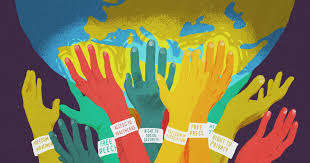
HRW lists a number of examples of troubling changes taking place in the U.S., including:
Use of heavily armed and masked agents (ICE) by government agencies to conduct “violent and abusive” raids.
Actions that can be described as scapegoating based on race and ethnicity; deployment of National Guard personnel into politically sensitive areas and retaliation against political opponents.
Efforts to increase executive power at the expense of checks and balances; weakening judicial independence and accountability to the people.
HRW thinks that these developments in the U.S., which has traditionally been seen as a strong protector of democratic values, will promote global authoritarianism by showing that even powerful democratic nations can regress without consequences.
Authoritarian Powers: China and Russia
The American component of the report may be the focal point of analysis; yet much of the world is still struggling to maintain a democratic government. A major reason for this is the actions being taken by China and Russia to actively undermine democratic governments by furthering their own tyranny. The report for 2026 indicates both nations are expanding their efforts to do so.
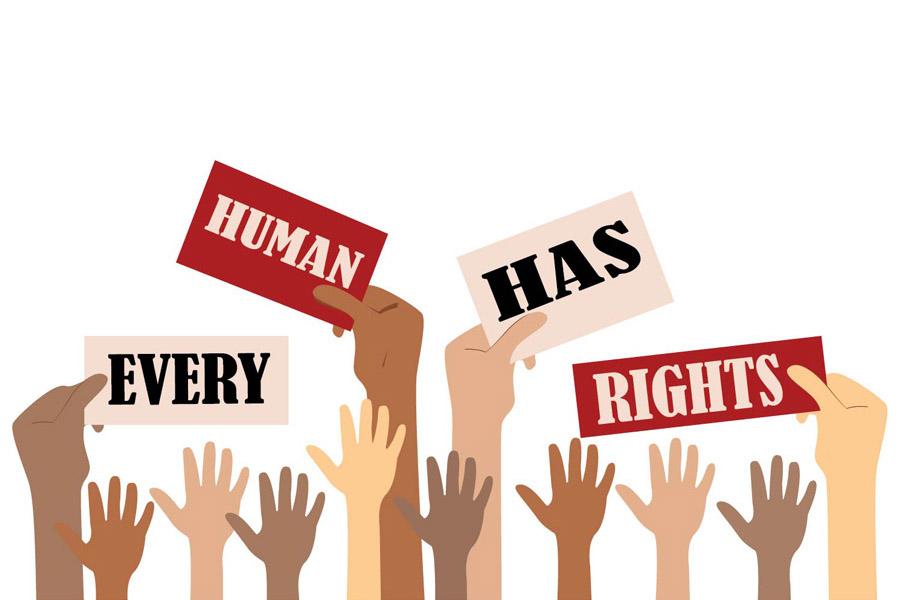
China has instituted extensive surveillance and censorship, effectively denying citizens basic freedoms including the right to express themselves and assemble freely or practice their religion without needless restrictions. Any individual who has challenged or dared to offer a contrary view than that which is held by the government is subjected to imprisonment, forced disappearances, and other forms of severe punishment (illegal by international standards). The Chinese government uses acts of violence and intimidation against ethnic minorities, such as those that reside within Xinjiang and Tibet, who lack the power to hold the government accountable for its actions.
Russia continues to enforce an increasingly authoritarian political environment. Major crackdowns on independent civic organizations, political opposition, the imposition of long prison sentences on dissenters, and continuing suppression of independent media all characterize an extreme climate of repression. By suppressing free and open expression of thought in Russia, authority is limiting the freedoms of everyday citizens; it also undermines the global principles of human rights that every nation should aspire to adhere to.
Defending Democratic Values: The Path Forward
While the world report of 2026 assesses the state of humanity’s rights to be dismal and predicts many of them will not be respected, it continues to call for action and cooperation among governments, civil organizations, domestic institutions, and the global community to promote a rule of law-based system that protects the basic fundamental right of all people (i.e., Human Rights). As indicated above, creating a coalition to advocate for and support human rights will result in human rights violations being more visible, costly, and politically unacceptable.
One of the key components of this strategy is engaging civil society organizations and movements that vigorously resist government oppression and creativity; i.e., they are constantly developing innovative ways to exercise their rights and fight the government’s attempt to violate those rights. In the United States and countries throughout the Middle East, grassroots social movements have proven to be extremely effective tools for resisting government oppression, and globally across all continents, youth-led movements are rapidly changing the dynamics of civil disobedience and protest against oppressive governments. Advocating for and protecting those movements—along with independent media and judicial processes—will be essential to reversing the current trend toward democratic recession.
In addition, it is essential for established democracies to demonstrate to people in the world that democracy and human rights have many real-world advantages beyond simple agreement; e.g., accountability, equality, and justice in government, etc.; therefore, all democracies must take advantage of their diplomatic relations and foster international cooperation by advocating for (engagement) and supporting (using all available resources) democratic norms and holding violators accountable for their actions; therefore, restoring faith in democracies around the globe. click here for source